Pu Luong Nature Reserve Travel Guide
00
05
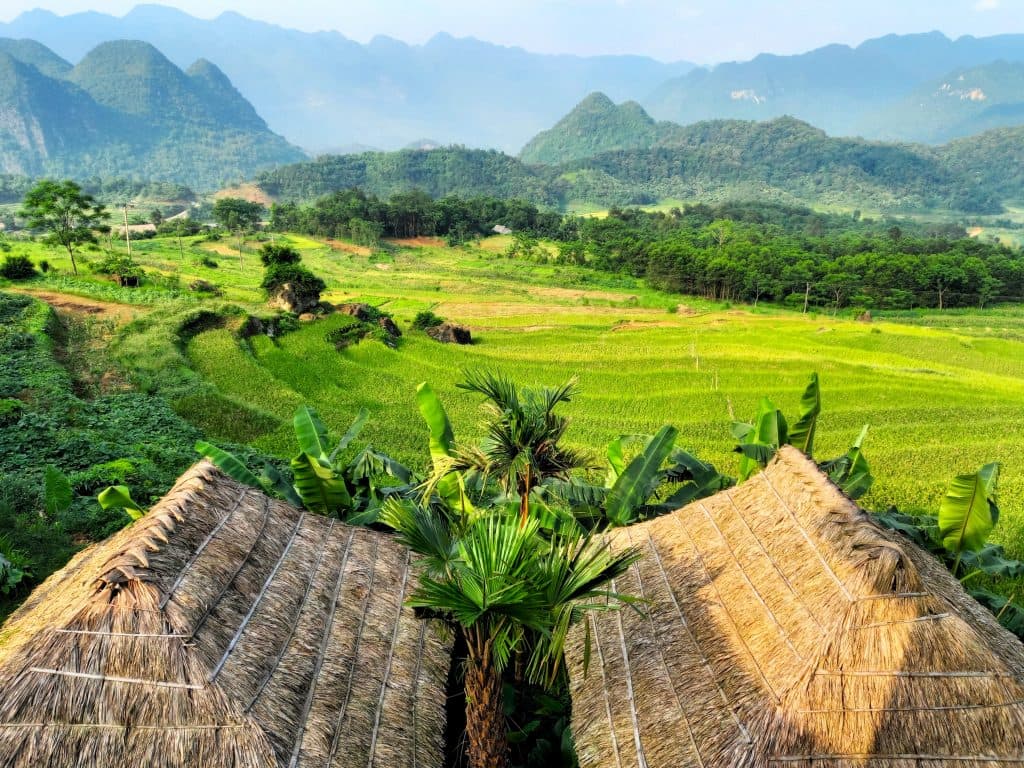
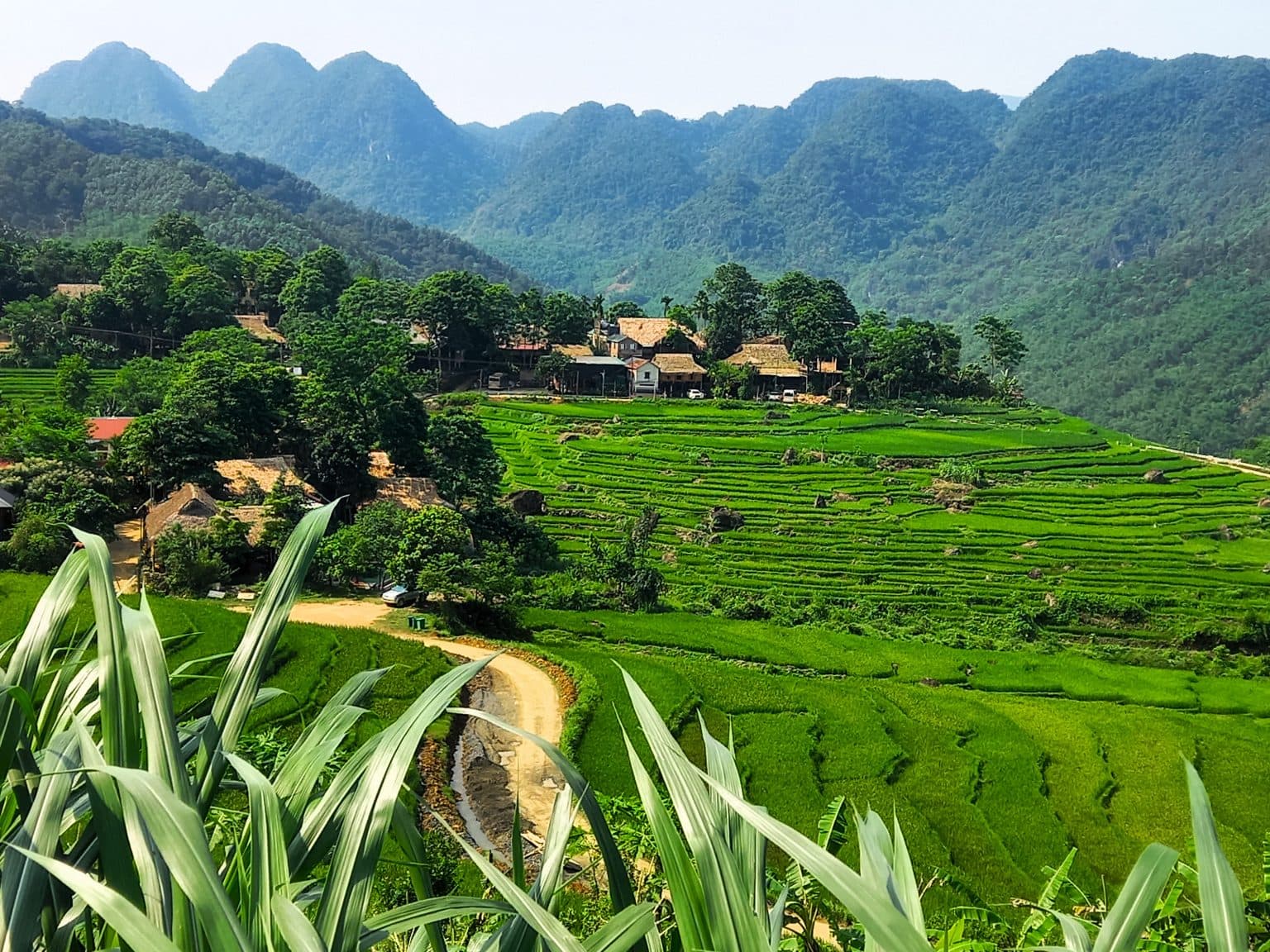
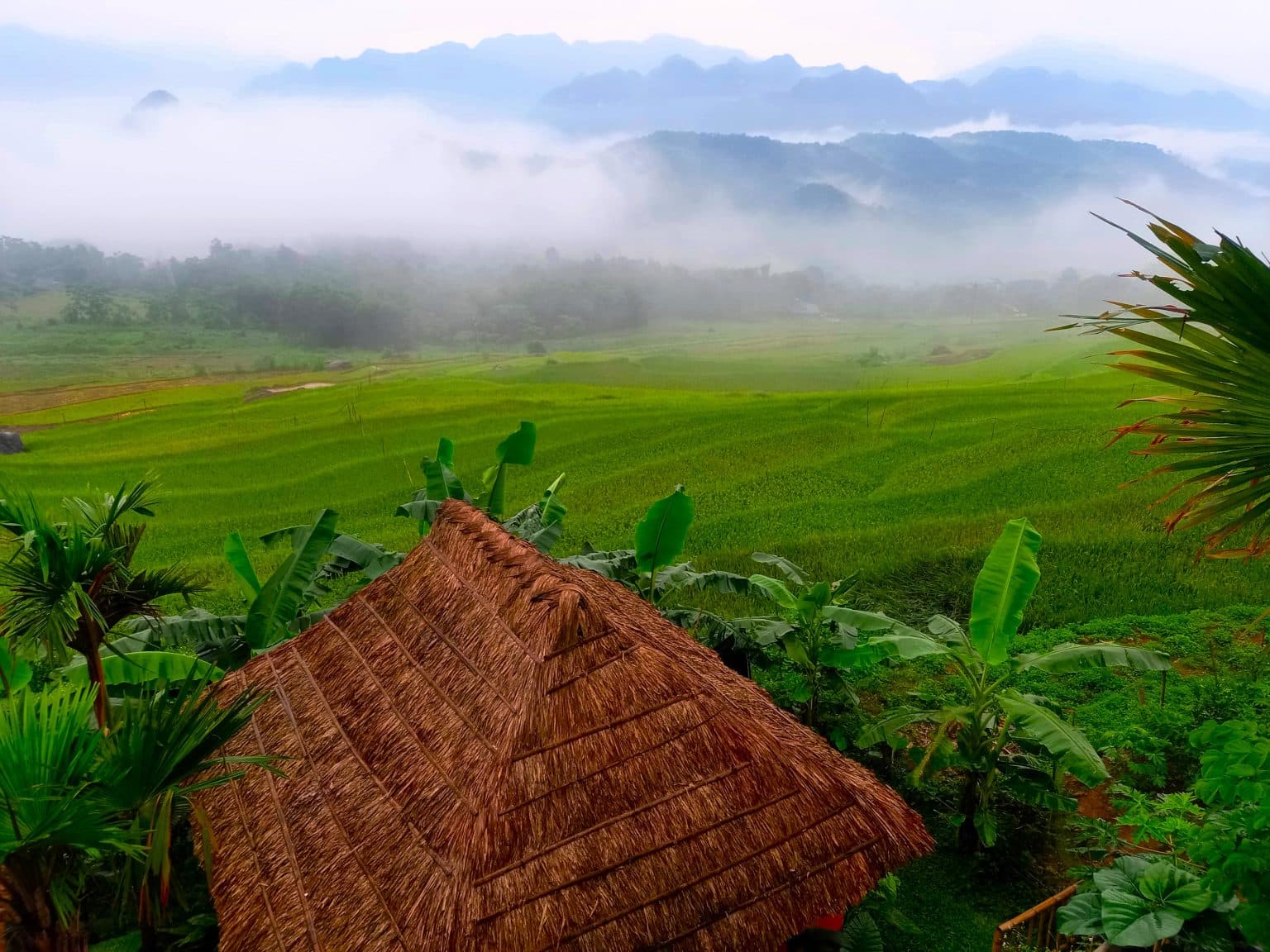
If you can imagine how an animated Disney movie set in an idealized rural Vietnam might look, then you are halfway to picturing the reality of Pù Luông Nature Reserve. A steep, fertile valley enclosed by jagged limestone mountains, Pù Luông Nature Reserve is dotted with wood-and-thatch hamlets where homes hover on stilts above luminous rice terraces that cascade down to the banks of blue rivers where they meet bamboo-fleeced slopes soaring skywards and poking above low-hanging cloud. Women, men and buffalo work the fields while children herd cattle and goats from pasture to pasture, playing in the rich earth and jumping off bamboo bridges into rivers as they go. Pù Luông, it seems, is a land where nature is almost entirely benevolent. Clusters of dramatically situated homestays and resorts offer some of the most atmospheric and romantic accommodation in Vietnam, and a base from which to explore the region. Hiking, cycling, motorbiking, climbing, kayaking, waterfalls, caves, ‘cloud hunting’, local markets and delicious home-cooked food await all travellers who venture to Pù Luông. Part of Thanh Hóa Province, just 3-4 hours southwest of Hanoi by road, Pù Luông is by no means a ‘secret’, indeed it gets busy on weekends and public holidays, but it is significantly less crowded than better-known destinations and, so far, development has been relatively sensible and sensitive.
A Sub-Tropical Garden of Eden in Northern Vietnam
This guide is intended as a primer for travellers wishing to visit Pù Luông Nature Reserve: an introduction to the fundamentals of exploring, experiencing and enjoying this bucolic, pastoral corner of Vietnam. I’ve included an annotated map of the nature reserve and written overviews of essential aspects, such as weather, orientation, accommodation, sights, activities and transportation. Click an item from the contents below for more details and, if you like this guide, please donate.
Weather & Orientation
trip to Pù Luông Nature Reserve is possible at any time of year. However, the best period for weather conditions and colours in the landscape is from April-September. Personally, my favourite time to visit is spring (March-May), when the sun is shining, colours are vibrant, the air is warm but not oppressive, the summer crowds have yet to arrive, and the whole region looks and feels like a sub-tropical Eden. Summer (June-August) is good for scenery but can be uncomfortably hot and humid and fairly busy with domestic and international visitors. Autumn (September-November) is pretty good as the temperatures are cooler, but after the harvest (September-October) many of the fields are burned and smoke streaks the valley. Winter (December-February) can be surprisingly grey and chilly, and the fields are fallow.
Pù Luông Nature Reserve is located in the northwestern corner of Thanh Hóa Province, 160km southwest of Hanoi. The nature reserve encompasses several deep valleys enclosed by steep limestone karst mountains which form ridges on a north-south axis, effectively cutting off Pù Luộng from the rest of the region. Pù Luông is bisected by QL15C (also labelled CT02), a breathtaking road leading above the valley from Cành Nàng town (Bá Thước) in the south, through the heart of the nature reserve, to the junction with QL15 in the north near Co Lương. The road serves as Pù Luông’s hub for transportation and facilities, such as accommodation and restaurants. Near the middle of road QL15C, Bản Đôn was once a tiny hamlet but is now effectively the centre of Pù Luông’s tourist industry, where most travellers base themselves, eat, drink and sleep. Further north on QL15C, accessed via steep concrete lanes, are a handful of other hamlets with accommodation, such as Kho Mường and Bản Hang. On the valley floor, near the centre of Pù Luông, are the dusty villages of Làng Tôm and Phố Đoàn, market towns that supply the local population with anything they can’t get in their mountainside hamlets. In the east of the nature reserve, Bản Hiêu is a cluster of hamlets clinging to the steep slopes of a spectacular valley with several homestays. To the north, an extremely steep road zigzags over the mountains to a stark plateau, often veiled in a silver mist, to Lũng Vân village, also dotted with homestays.
Where to Stay
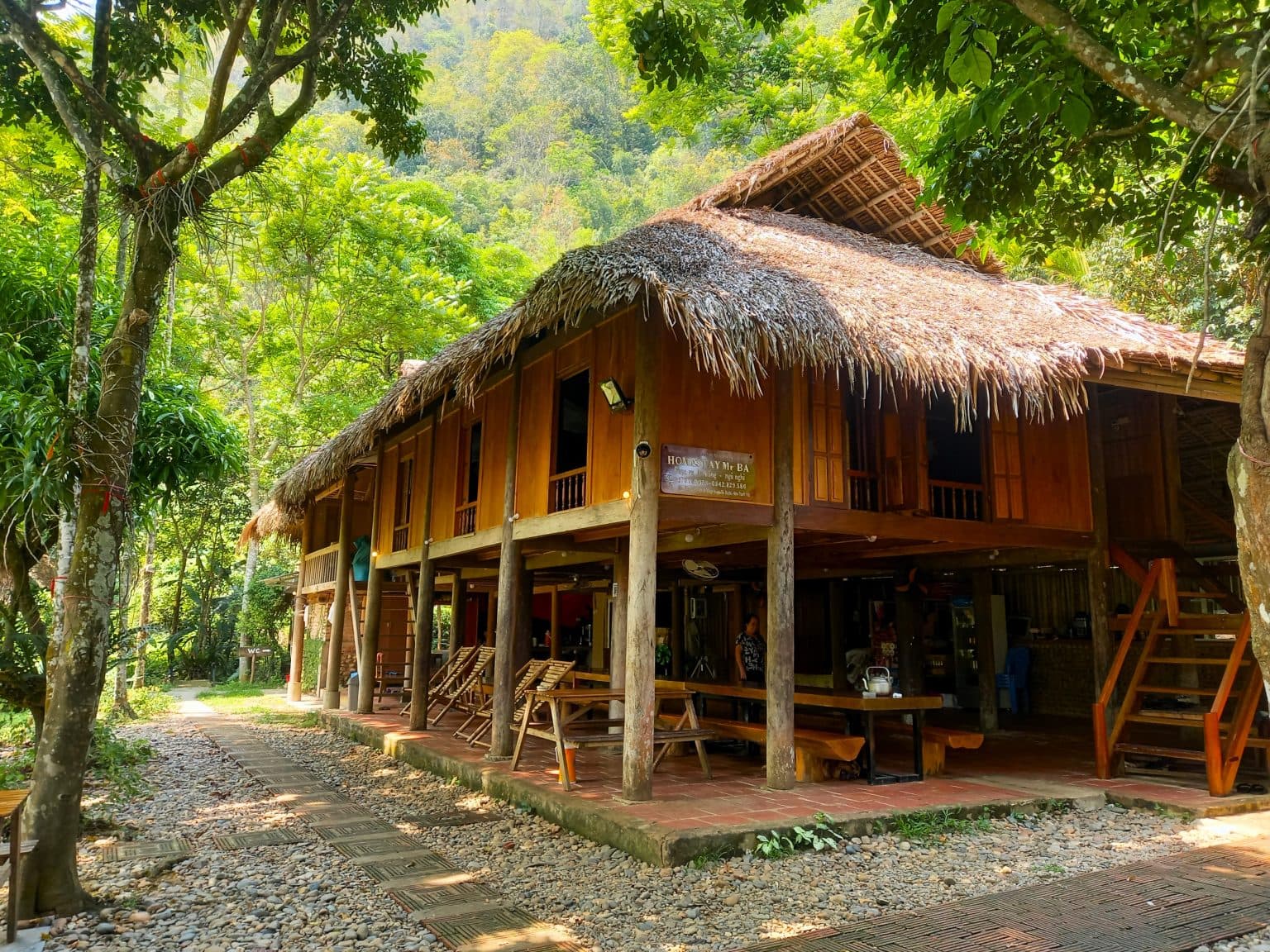
part from the scenery, a highlight of visiting Pù Luông is staying at one of the many cosy, atmospheric and beautifully situated homestays or resorts that are dotted throughout the nature reserve. There is a lot of accommodation to choose from, so it’s worth spending some time before settling on a property to base yourself at. A decade ago, accommodation in Pù Luông was mostly in cheap, local homestays, sleeping on a mattress under a mosquito net on the upper floor of a family home in a wood-and-thatch stilt house among the rice fields and farm animals with a shared bathroom. These days, a lot of the accommodation in Pù Luông is more upmarket: eco-resorts, wellness retreats and boutique homestays with infinity pools overlooking the rice terraces, ensuite bathrooms, mod-cons, and decor that reflects the local aesthetic, but run by business-savvy Hanoians rather than local families. As a general rule, homestays are better for experiencing local life, whereas resorts as geared more towards relaxation and comfort. However, both types of accommodation make the most of Pù Luông’s majestic scenery and attractive traditional architectural style.
Reservations & Room Rates: In general, real homestays are very cheap: for less that 150,000vnđ you will get a bed in a communal room with clean linen, mosquito net and shared bathroom facilities, but the price will not include any food: that is ordered and paid for separately (see Eat & Drink). Making reservations for real homestays like this isn’t really necessary (or possible) as many don’t have websites or published contact information. Rather, real homestays are found and booked by independent travellers exploring the nature reserve on foot or two wheels, showing up at the villages and following the signs to homestays then asking for a room for the night. Things are very different for the boutique homestays and resorts, many of which have websites, are listed on booking search engines, such as , and should be booked in advance if travelling on a weekend or during a public holiday. Rates range from $15-$100+ per night for a private room with private bathroom, usually including breakfast and use of any facilities, such as swimming pool or gym. Because accommodation is spread around the nature reserve, it is a good idea to book your first night’s accommodation in advance, as this means you will have a specific place to aim for when you arrive. After that, you can either stay more nights at your original accommodation or choose to move somewhere else instead.
Villages & Homestay Clusters: Accommodation is spread throughout the nature reserve, mostly in clusters in and around several villages that dot the countryside. I’ve marked each village with a red house icon on my map. Below, I’ve written a brief overview of each village, including some specific accommodation suggestions, but there are many more available. In some cases you can use the Agoda links to check availability and book directly or contact the accommodation via their website. You can also browse dozens of places to stay in Pù Luông
Bản Đôn Village [MAP] Roughly halfway along road QL15C, Bản Đôn features the densest concentration of accommodation in Pù Luông Nature Reserve. Sprawling down the steep hillsides and overlooking limestone mountains, rice terraces and jungle, Bản Đôn’s network of concrete lanes leads to dozens of good homestays and resorts. You’ll find everything from cheap homestay dorms to luxurious eco-retreats. The views are astonishing and some of the accommodation is excellent. Accommodation options now continue along the roadside for a while north of Bản Đôn. Travellers are spoiled for choice. Some standouts include Pu Luong Treehouse [Check Rates], Pu Luong Natura [Check Rates], Pu Luong Retreat [Check Rates] and Hanasa Resort [Check Rates] among others.
Bản Hiêu Village [MAP] Located in the east of the nature reserve, Bản Hiêu is a collection of homestays and resorts centered around a pretty waterfall (Thác Hiêu) accessed via a series of steep lanes. Surrounded by jungle and limestone karsts rising sharply for the rice paddies, Bản Hiêu is isolated and small, but thanks to growing popularity, it is now a bit overcrowded with homestays. The main homestay cluster (lower Bản Hiêu) is bunched around the entrance to the waterfall. The standout accommodation here is Les Bains de Hiêu [Check Rates], a highly atmospheric boutique homestay perched on the slopes. Another good option is Bản Hiêu Garden Lodge Homestay [Check Rates]. To get away from the overcrowded feeling near the waterfall, head up the lane to upper Bản Hiêu, a ridge above the waterfall where a tiny hamlet boasts a few good homestays, such as Mr Ba Homestay (0379 781 988) and Duy Phương Homestay [Check Rates]. Down in the valley, Pu Luong Hideout Bamboo [Check Rates] is also very good.
Kho Mường Village [MAP] A small hamlet in a clearing between soaring limestone pillars, Kho Mường only has a few homestays, all of which are much more traditional than those you find in Bản Đôn and Bản Hiêu. Kho Mường is quiet, remote, scenic and can only be accessed via a very steep, narrow lane or dirt pathway. Homestays, such as Mr Nếch’s (0917 252 041), will appeal to travellers wanting a more rustic and ‘authentic’ experience. The nearby Dơi Cave is impressive and there’s good hiking here. You won’t find cocktails or infinity pools in Kho Mường.
Bản Hang Village [MAP] In the northwest of the nature reserve, Bản Hang is accessed via a steep lane leading off QL15C. Set in a valley along the banks of a clear river, Bản Hang is a small settlement with a handful of homestays, many of which are aimed at accommodating large groups. The river is pretty and good for bathing, there’s a cave nearby and some hiking, but Bản Hang is quite far from the rest of Pù Luông’s attractions. Hiếu Yến Homestay (0382 045 782) is a pretty place to stay, just a short walk from the river.
Lũng Vân Village [MAP] In the northern reaches of the nature reserve, Lũng Vân is a scruffy village overlooking a barren and rocky plateau where clouds often linger throughout the day, caught is a crown of protruding limestone karsts. To get there, one must take an extremely steep road up a mountain pass, affording spectacular views. There are quite a few homestays scattered across the plateau, including the substantial Đại Ngàn Mây Hotel [Check Rates] and Nam Sơn Maison (0392 001 979), as well as a homestay hamlet just south of Lũng Vân village. This part of the nature reserve it at a higher altitude and temperatures are cooler, especially at night.
Where to Eat & Drink
here and how you drink and dine will depend largely on what kind of accommodation you’re staying in and which village you are based in. Because there are no large settlements within Pù Luông Nature Reserve, there isn’t much in the way of street food or casual dining, like you would find in most Vietnamese towns. Instead, most travellers dine at their accommodation. If staying in a homestay, meals will be a set price and set menu and generally guests will dine together. If staying in a resort, there will likely be an a là carte menu for food and drink and guests can dine separately. Bản Đôn is the only village where it’s possible for travellers to ‘dine out’ at restaurants beyond their accommodation. Many of the larger resorts have restaurants that are open to non-guests and there are an increasing number of casual dining options lining road QL15C as it passes through Bản Đôn village. Some of these restaurants are pretty bad compared to the excellent homecooked meals you get in the homestays. However, a few of them are very, very good indeed:
Nhà Hàng Đặc Sản Pù Luông [MAP] A magnificent restaurant with a limited menu of local specialities as well as some more familiar dishes aimed at foreign diners. Make sure you order off the Vietnamese menu, not the English menu. The restaurant features a terrace overlooking the valley. Don’t miss the slow-cooked pork belly (thịt lợn bản), stir-fried bamboo with betel leaf (măng xào lá lốt), and banana and honey fritters (chuối đốt rượu) for dessert. There’s also a drinks menu, including cocktails, wine and local rice liquors infused with various flavours. By contrast, the next door Pù Luông 0KM Restaurant is a dreadful imitation: don’t confuse the two.
Gateway Inn Pù Luông [MAP] Offering excellent value family-style set menus and views across the valley, this is a relatively new addition to the dining scene in Bản Đôn. Make sure you’re hungry, because the portions are big.
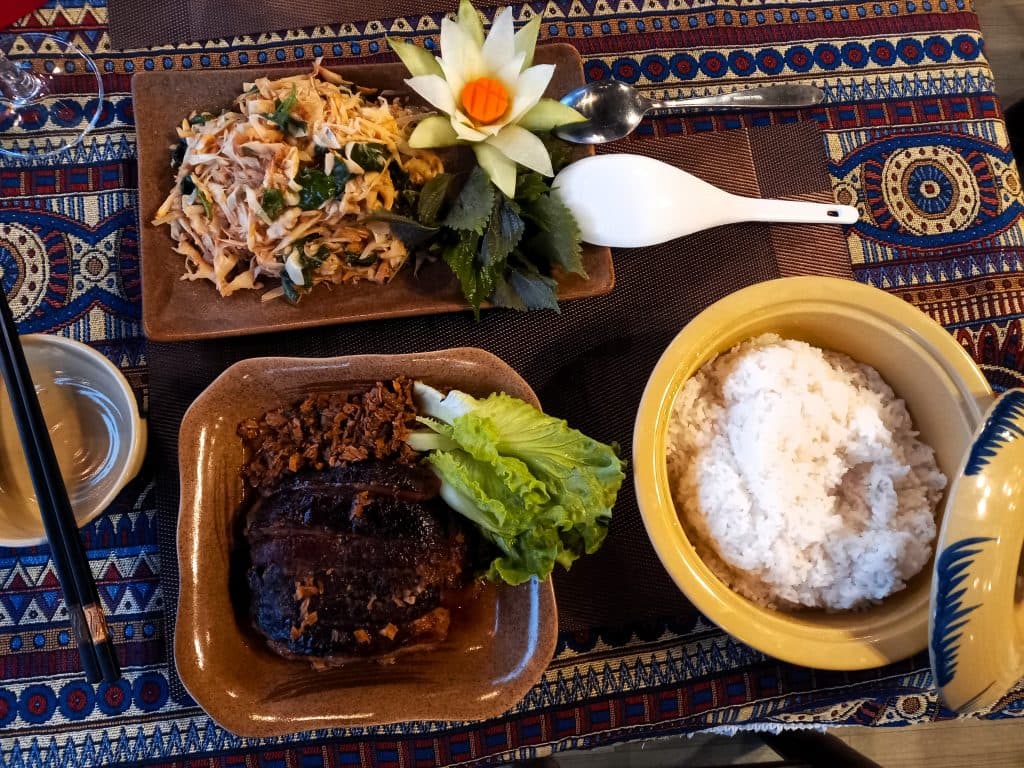
Homestays & Resorts: At homestays, host families cook delicious meals for their guests using local ingredients to make local dishes. These meals are a highlight of any homestay experience. Guests are usually required to order several hours in advance and give a specific time for dining, so that the hosts can prepare and arrange the meals accordingly. Prices range from about 100,000-250,000vnđ per person for dinner which, considering the quality and quantity of food, is very good value. Vegetarian meals can be arranged too; just make sure you communicate this clearly when ordering. At most resorts, there’s an a là carte menu to order from. Some resorts offer set menus, and these are almost always the best option. Depending on your resort, you may still have to order well in advance of your dining time so that the kitchen can stock up on the necessary supplies.
Homestay food is generally excellent. Resort food can be hit and miss, but is sometimes exceptional. In Pù Luông it is always best to order and eat local dishes, not Western-style meals. An example of a homestay meal from one of my recent visits to Pù Luông was: spice and herb pork patties, aromatic spring rolls, small fried fish from a local stream, a hearty cabbage soup, stir-fried ‘wild’ greens from the jungle and honey-infused, home-brewed rice liquor. For breakfast, a kind of pancake made from rice flour and duck eggs dipped in wild honey and fresh leaf green tea.
What to See & Do
There’s a lot to see, do, experience and explore in and around Pù Luông Nature Reserve. Hiking, cycling, motorbiking, caves, waterfalls, bamboo rafts, water wheels, river bathing, climbing, local life, markets and even ‘cloud hunting’. I’ve marked many sights, routes and activities on my map, which travellers can use to explore the nature reserve. Below, I’ve written a brief introduction to some of the things to see and do in Pù Luông. You could easily spend a full week exploring the nature reserve, but anything from 3-6 days is fine. Most things can be done independently, without the need for a guide or going on a tour. In addition, most accommodations in Pù Luông can offer advice or arrange trips for their guests.
Local Life & Markets: If you’re staying in a real homestay, simply observing (or even partaking) in daily life can be fun and engaging. Many homestays are essentially small farms with livestock, crop fields, herb and vegetable gardens, tropical fruit trees, looms for making clothing, bamboo pipes for irrigating the fields by channeling water from mountain streams, large cooking hearths around an open flame and open-plan food preparation area. It is fascinating to witness and try to understand how everything works and how families sustain themselves living on these steep slopes far from the big cities. There are a few local markets that take place on specific days in the nature reserve. Enquire at your accommodation to get the dates. The biggest is generally in Phố Đoàn.
Hiking, Cycling & Motorbiking: The nature reserve and surrounding area is ideal for long walks, challenging bicycle rides and scenic motorbike riding. You can do this independently, without the need to hire a guide or go on a tour. Because the road network around Pù Luông is good but traffic is light, it’s possible to use all the routes I’ve drawn on my map with red and blue lines for hiking or cycling or motorbiking. Spending a few days following these routes is a very rewarding way to explore the nature reserve and you’ll be able to visit many of Pù Luông’s attractions along the way. Your accommodation should be able to arrange bicycles or motorbikes for day rental. Remember to bring some water and sunscreen and maybe a couple of snacks to keep you going. Note that the blue route on my map is the Pù Luông Loop, a figure-of-eight that starts and ends in Bản Đôn village. This is the most common itinerary. The red lines on my map are side routes to explore further flung parts of the nature reserve, with Bản Hiêu being the most popular, and Lũng Vân and Pù Bin being the most remote. There’s also the possibility of climbing Mt. Pù Luông, but you will need a guide for this – ask at your accommodation. (To explore the wider area beyond Pù Luông Nature Reserve on two wheels, take a look at my guide to The Limestone Loop).
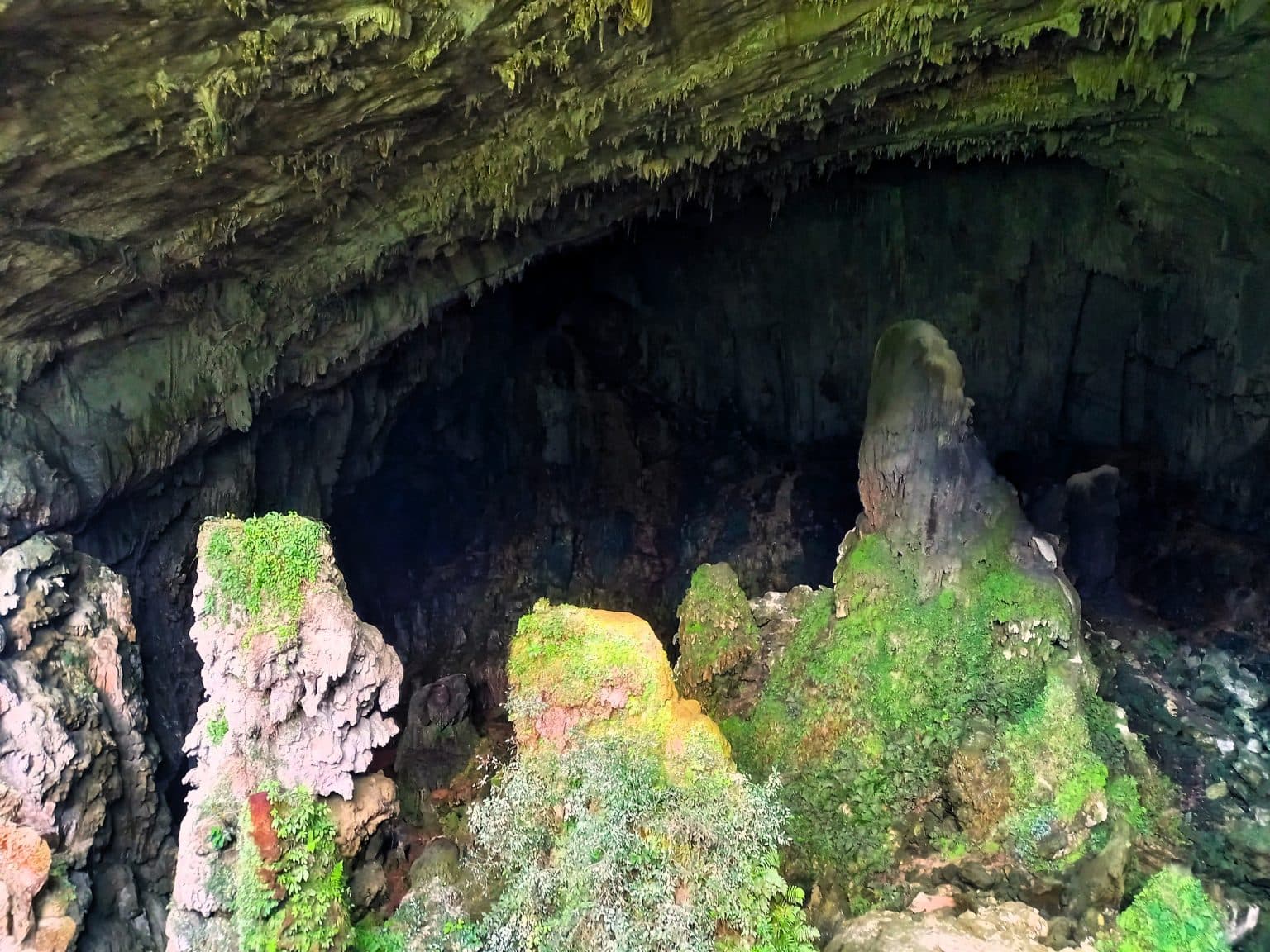
Caves: The limestones mountains hide many caverns, a couple of which can be entered. Hang Dơi (Bat Cave) is accessed via a pretty path through the rice paddies just beyond Kho Mường village. The entrance (10,000vnđ) is across a wooden bridge over a stream and up to the cave mouth. The cave was formed around 250 million years ago and its system extends 2.5km under the mountains. Little steps (they can be slippery) lead down into the cavern and around its base where moss-covered stalagmite’s rise from the dark towards the light of the cave mouth, like plants seeking sunlight. It’s an impressive sight and worth the trip. There are other small caves in the nature reserve, including one near Bản Hang village: ask for directions once you get to the village.
Waterfalls: Pù Luông and its immediate environs are dotted with some picturesque waterfalls. Cascading through the jungle and falling over limestone terraces, the light blue water collects in luminous pools that are perfect for bathing. Hiêu Waterfall (thác Hiêu) is particularly striking and conveniently located close to the two Bản Hiêu homestay villages. However, the falls have become very popular in recent years which has led to some litter and overcrowding around the site. Further east, Mu (thác Mu) and Mây (thác Mây) waterfalls are equally pretty and can be reached on foot from Bản Hiêu with a guide, or by road from the east via the Ho Chi Minh Road. The appearance of the waterfalls depends on the season and how much rainfall there has been: too little and the falls lose their majesty; to much and the falls become swollen with brown water.
Thanh Hoa
Travel Blog
Why you should choose us?
We have Vietnam tourism license
We have good agencies
We try make you happy